
How to Choose an R&D Tax Advisor: A Strategic Guide for UK Companies in 2026

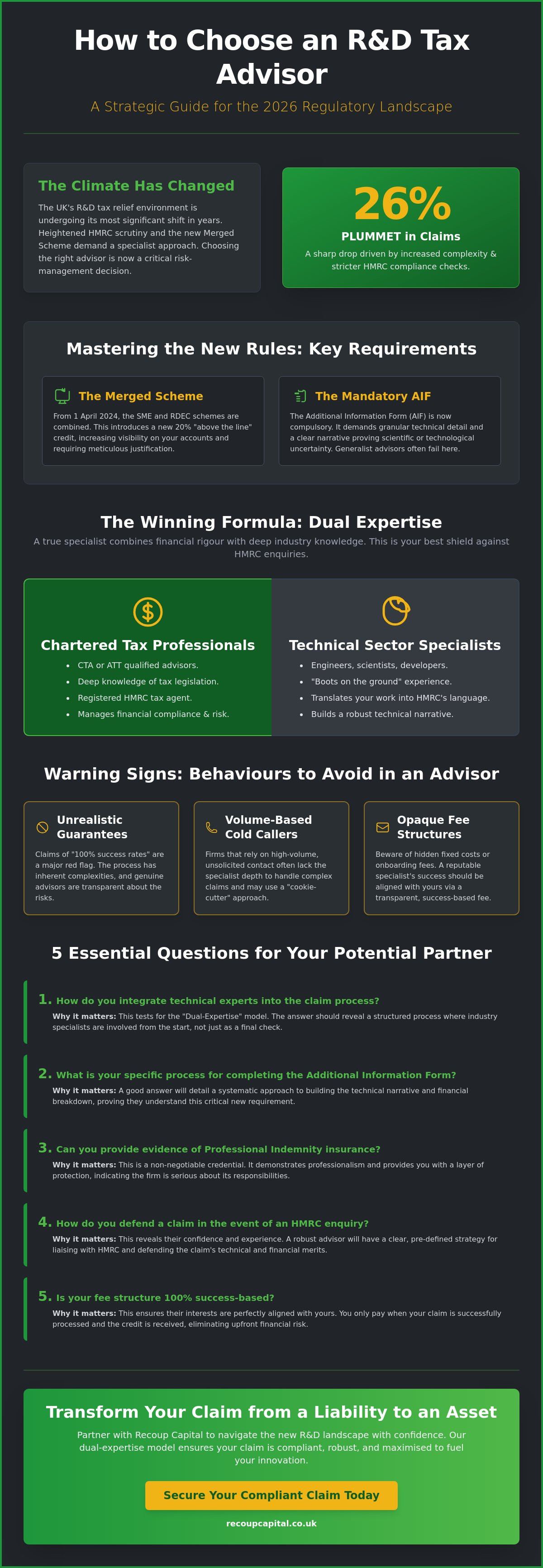
Did you know that the number of R&D tax credit claims recently plummeted by 26%? This sharp decline isn't because UK innovation has slowed; it's because HMRC's heightened scrutiny and the complexity of the merged scheme have turned the application process into a high-stakes regulatory challenge. Understanding how to choose an R&D tax advisor is no longer just about administrative convenience. It's now a vital risk-management exercise that determines whether your business thrives or faces an intrusive enquiry.
It's understandable if you feel frustrated by generic accountants who miss the technical nuances of your engineering or software breakthroughs. You deserve to see your tax relief reinvested into growth rather than lost to avoidable errors. We'll show you how to identify a partner who provides a robust shield against HMRC whilst capturing every penny you're owed under the 2026 rules. This guide breaks down the essential criteria for selecting a specialist, from their mastery of the mandatory Additional Information Form (AIF) to their ability to navigate the specific thresholds of the Enhanced R&D Intensive Support (ERIS) scheme. We'll ensure your next claim is a strategic asset, not a liability.
Key Takeaways
- Understand why the 2024 Merged R&D Scheme requires a more sophisticated approach to compliance and technical documentation than previous years.
- Discover how to choose an R&D tax advisor by prioritising a "dual-expertise" model that combines chartered tax qualifications with deep technical sector knowledge.
- Learn to identify critical red flags, such as volume-based "cold callers" or unrealistic success guarantees, that could trigger avoidable HMRC enquiries.
- Master the five essential questions to ask potential partners to ensure they can navigate the latest HMRC manuals and tribunal rulings effectively.
- Recognise how a transparent, partnership-oriented approach transforms compliant tax relief into a powerful tool for reinvesting in your company’s innovation.
The Evolution of R&D Tax Relief: Why Your Choice Matters in 2026
The regulatory environment for innovation funding shifted significantly on 1 April 2024. This date marked the launch of the Merged R&D Scheme, ending the long-standing distinction between SME and RDEC claims. For companies operating in 2026, the era of "volume-based" claim shops is over. HMRC's focus has sharpened, leading to a 26% decrease in the provisional number of claims for the 2023-24 period as the bar for technical evidence rises. It's no longer enough to simply "have a go" at a claim; the margin for error has disappeared.
HMRC's increased compliance activity isn't just about catching fraud. It's about ensuring every UK tax incentive is backed by robust, evidence-based reporting. A poorly prepared submission carries heavy risks. Beyond the immediate loss of the credit, businesses face potential fines, interest charges, and the long-term burden of being flagged for future enquiries. This high-risk climate has completely redefined how to choose an R&D tax advisor. You need a specialist who understands that quality reporting is your only true shield against intrusive scrutiny.
The Merged Scheme and the New Standards of Evidence
The 20% "above the line" credit in the merged scheme brings a new level of visibility to your accounts. Central to this is the Mandatory Additional Information Form (AIF). This document requires granular technical narratives that explain exactly how your project meets the criteria for scientific or technological uncertainty. Generalist bookkeeping simply can't bridge the gap between financial figures and engineering reality. If your advisor doesn't have a structured process for capturing these technical nuances, your claim is vulnerable to rejection before it's even fully reviewed.
The Strategic Value of Specialist R&D Advice
Modern R&D relief isn't just a year-end rebate. It's a strategic business tool. When considering how to choose an R&D tax advisor, the focus should be on their ability to turn technical data into a strategic asset. By understanding R&D tax credits explained in the context of your specific sector, you can better forecast cash flow and reinvest capital where it matters most. This partnership ensures that tax relief acts as a catalyst for growth rather than a source of regulatory anxiety. It's about transforming a complex requirement into a predictable, robust asset for your company's future.
Essential Credentials: What Defines a True R&D Tax Specialist?
Understanding how to choose an R&D tax advisor begins with looking beyond a standard accounting degree. A true specialist operates on a "Dual-Expertise" model. This approach pairs Chartered Tax Advisers (CTA) or members of the Association of Taxation Technicians (ATT) with technical experts from your specific industry. Without this balance, your claim risks being either technically shallow or financially inaccurate. HMRC expects a high standard of professional care that generalist firms often struggle to provide.
The current lack of regulation in the tax advice market means almost any firm can call itself an R&D expert. This makes it vital to verify that your chosen partner is a registered HMRC tax agent with robust Professional Indemnity insurance. A national presence is also a significant advantage. Firms with a broad footprint often have deeper experience in handling complex HMRC liaisons and are better equipped to defend claims across various regional tax offices, ensuring consistency in how your innovation is presented.
When deciding how to choose an R&D tax advisor, pay close attention to their fee structure. Many high-quality specialists operate on a success-based model. This aligns their interests with yours, as they only receive payment when your claim is successfully processed. Be wary of hidden fixed costs or "onboarding fees" that decouple the advisor's reward from the actual outcome of your submission. Transparency in pricing is usually a reliable indicator of the firm's confidence in their own technical ability.
The Role of Technical Sector Specialists
Accountants are excellent with numbers, but they rarely have "boots on the ground" experience in civil engineering, software development, or precision manufacturing. Technical specialists speak the language of your internal teams. They can identify "hidden" R&D activities, such as bespoke tooling or environmental remediation, whilst ensuring the project meets the strict criteria for scientific uncertainty. This technical literacy minimises disruption to your daily operations, as the advisor can translate complex project data into the narratives HMRC requires without needing constant hand-holding from your staff.
Professional Indemnity and Regulatory Compliance
Credibility is built on a foundation of rigorous quality assurance. Every claim should undergo a multi-stage review process before submission. At Recoup Capital, we ensure that chartered tax accountants are integrated into every stage of the process, providing a final layer of forensic scrutiny. This level of oversight is essential for maintaining HMRC transparency and protecting your business from the reputational risks of an inaccurate filing. If you're looking for a partner committed to long-term collaboration, reviewing our frequently asked questions can help clarify the standard of care your business deserves.
Identifying Red Flags: Behaviours to Avoid in an Advisor
HMRC's heightened scrutiny means that any advisor promising a "100% success rate" is likely ignoring the reality of the 2026 landscape. In an environment where the number of claims has fallen by 26%, such bold promises are often a sign of a volume-based operation that prioritises quantity over compliance. If you're researching how to choose an R&D tax advisor, start by looking for transparency rather than perfection. True specialists will be honest about the risks and the rigorous standards required for a successful submission. They won't hide behind impossible guarantees.
Aggressive sales tactics are another significant warning sign. If a firm's primary contact method is an unsolicited cold call, they're likely operating a high-churn model. This approach rarely allows for the deep technical immersion necessary to protect your business. A specialist's first priority should be a technical interview. If they don't ask to speak with your lead engineers or software developers, they cannot accurately capture the scientific uncertainties required by the Mandatory Additional Information Form (AIF). Walk away from any advisor who suggests they can "write the report for you" without detailed technical input.
The Risk of Over-Claiming and Spurious Projects
Pushing the boundaries of what constitutes R&D can have severe consequences beyond the rejection of the claim itself. Spurious or "grey area" submissions can trigger wider corporation tax investigations, putting your entire financial history under the microscope. A reputable advisor will often say "no" to certain projects if they don't meet the threshold for innovation. This integrity is essential for meeting the "Reasonable Care" standard. Following practical pointers from industry bodies ensures that your submission is robust enough to withstand a random audit and protects your long-term reputation with HMRC.
Contractual Lock-ins and Lack of Transparency
Always scrutinise the fine print for multi-year lock-in clauses. You should be free to move if the service quality drops or if your business needs change. Likewise, be wary of advisors who charge separately for HMRC enquiry support. When evaluating how to choose an R&D tax advisor, look for a partner who includes enquiry defence as part of their core service. A partnership-first advisor includes this protection as part of their standard success-based fee. Understanding why claim through a transparent partner helps you see R&D relief as a strategic growth tool rather than a contractual burden. Transparency in how fees are calculated is non-negotiable for long-term collaboration.
The Selection Framework: 5 Questions to Ask Your Potential Partner
Finding the right partner requires a structured approach. When researching how to choose an R&D tax advisor, you shouldn't settle for vague promises of success. Instead, use these five targeted questions to probe their technical depth and regulatory resilience:
- What is your specific experience in my sector?
- How do you stay abreast of the latest HMRC manuals and tribunal rulings?
- Who exactly will be writing our technical narratives: an accountant or a specialist?
- What is your process for defending a claim if HMRC opens an enquiry?
- Can you provide case studies of claims involving Land Remediation or Patent Box?
Their answers will reveal whether they're a volume-based processor or a strategic partner invested in your long-term growth. If an advisor can't explain who is actually writing your technical narratives, your reports may lack the scientific depth HMRC expects in 2026. You need to know that your advisor is proactive rather than merely reactive to regulatory changes.
Finally, demand clarity on their adjacent expertise. A robust advisor should be able to discuss claims involving corporate finance or complex patent structures. If they don't have a structured plan for HMRC enquiries, you're essentially on your own if a project is challenged.
Assessing Sector-Specific Competence
Construction and engineering firms face unique challenges that generalist advisors often overlook. For instance, a specialist should automatically identify opportunities for Land Remediation Relief alongside your R&D claim. You can test an advisor's competence by asking them to define the boundary between "routine work" and "technological uncertainty" within your specific field. If they can't speak fluently about the technical hurdles your engineers face, they won't be able to defend those projects during an audit. This sector-specific knowledge ensures that your claim is fully optimised whilst avoiding ineligible territory.
Evaluating the HMRC Defence Strategy
A common but hollow claim from many firms is that they have a "good relationship" with HMRC. In reality, HMRC's compliance teams follow strict manuals and don't grant favours based on relationships. When deciding how to choose an R&D tax advisor, you need to know if they take a "settlement-first" or a "technical-defence" approach. A settlement-first advisor might suggest conceding qualifying costs just to close an enquiry quickly. Conversely, a technical-defence specialist stands by the evidence, providing a full audit trail for every pound claimed. This level of transparency protects your business from unnecessary losses and ensures your innovation is valued correctly. If you want a partner who prioritises your bottom line, book a no-cost introductory consultation to see how we handle technical defences.
Recoup Capital: Your Partner in Compliant Innovation and Growth
Recoup Capital represents the definitive answer to the question of how to choose an R&D tax advisor. We don't just process paperwork; we act as a protective guide through the complexities of the 2026 tax landscape. Our methodology combines forensic accounting with deep technical sector expertise. This ensures that every project, from software architecture to structural engineering, is described with the technical precision HMRC demands. By integrating our findings into a broader corporate finance strategy, we transform your tax relief from a one-off payment into a strategic business tool.
We maintain the highest compliance standards through a commitment to absolute HMRC transparency. Our team understands the "Reasonable Care" standard intimately and applies it to every stage of our forensic review. We offer a time-limited, no-cost introductory assessment. This allows us to demonstrate our value through tangible results before you make any long-term commitment. It is a low-friction way to see exactly how your innovation translates into capital recovery without the pressure of a traditional sales pitch.
A Relationship-First Approach to Tax Incentives
We view ourselves as long-term partners rather than mere service providers. This relationship-first approach means we look for every opportunity to strengthen your balance sheet across multiple years. For many UK firms, successfully navigating an HMRC enquiry with our support has been a turning point in their growth. We help you look beyond the immediate credit to see how savings can be reinvested into capital allowances for commercial property. This holistic view ensures that your business innovation is supported by a robust financial foundation.
Getting Started with a Strategic Review
Your first strategic review is designed to be efficient and high-impact. You will meet with a specialist who understands your sector's specific technological hurdles. To ensure a streamlined assessment, it is helpful to have your project descriptions and cost breakdowns ready for discussion. We will provide a clear, evidence-based roadmap for your claim, identifying potential risks and opportunities early in the process. When considering how to choose an R&D tax advisor, the focus should always be on quality and technical defence. Book your no-obligation R&D strategic review with Recoup Capital today to secure your company's future through compliant innovation.
Secure Your Innovation Strategy for the Years Ahead
Navigating the 2026 tax landscape requires more than just processing figures; it demands a partner who understands the technical heartbeat of your business. By prioritising the "Dual-Expertise" model and avoiding the red flags of volume-based shops, you've already taken the first step toward long-term compliance. Mastering how to choose an R&D tax advisor ensures your business remains protected from HMRC scrutiny whilst transforming tax relief into a powerful strategic asset for growth.
At Recoup Capital, we bridge the gap between complex regulation and business utility. Our team of Chartered Tax Accountants and technical specialists provides the forensic scrutiny your innovation deserves. We focus specifically on the Construction and Engineering sectors, operating on a success-based fee model that aligns our goals with your success. Don't leave your capital to chance in an era of heightened oversight. You can request a complimentary R&D tax credit assessment from our specialists today to begin a transparent, high-value partnership. Your next breakthrough deserves the most robust protection available.
Frequently Asked Questions
Can my general accountant handle our R&D tax credit claim?
While your general accountant can technically file a claim, they often lack the technical industry knowledge required to maximise relief or defend it against scrutiny. R&D claims now require deep scientific and technological narratives that go far beyond standard bookkeeping. Specialised advisors bridge this gap by employing experts who speak the same language as your engineers and developers.
What qualifications should an R&D tax advisor have in 2026?
In 2026, you should look for advisors with Chartered Tax Adviser (CTA) or Association of Taxation Technicians (ATT) status. However, qualifications in tax aren't enough on their own. The best firms also employ technical specialists with backgrounds in fields like engineering or software development to ensure your technical reports meet HMRC's high standards of evidence.
How much do R&D tax advisors typically charge in the UK?
Most reputable specialists operate on a success-based fee model, meaning they only receive payment once your claim is successfully processed by HMRC. This structure aligns the advisor's interests with your own. When considering how to choose an R&D tax advisor, you should be cautious of any firm requesting significant upfront costs or "onboarding fees" before any value has been demonstrated.
What happens if HMRC opens an enquiry into a claim prepared by my advisor?
If HMRC opens an enquiry, a high-quality advisor will lead the defence by providing the necessary technical evidence and handling all correspondence. It's essential to confirm that enquiry support is included in your initial agreement. A robust defence strategy relies on the advisor's ability to stand by the technical narratives they prepared during the submission process.
How long does the process of choosing and engaging a new R&D advisor take?
Engaging a new advisor typically takes between one and two weeks from the initial consultation to formalising the partnership. This period allows for a thorough strategic review of your current projects and a forensic look at your qualifying expenditure. Once engaged, the speed of the actual claim process depends on the complexity of your technical activities and the availability of your internal teams.
Can an R&D advisor also help with Patent Box or Capital Allowances?
Yes, a comprehensive R&D specialist can often identify opportunities for Patent Box or Capital Allowances as part of a wider corporate finance strategy. This holistic approach ensures that your business doesn't miss out on adjacent tax incentives like Land Remediation Relief. Integrating these services provides a more robust financial return and streamlines your compliance efforts.
Is it possible to switch R&D tax advisors mid-way through a claim?
You can switch advisors mid-way through a claim, although you should first review your existing contract for any notice periods or exit fees. It's often beneficial to switch if your current provider isn't offering the technical depth required for the 2026 regulatory environment. A new specialist can often perform a "rescue" review to ensure your pending submission is fully compliant.
What are the risks of using an R&D advisor who isn’t a chartered tax professional?
Using an advisor without chartered status increases the risk of technical errors and potential penalties from HMRC. Non-chartered firms may lack the rigorous internal quality assurance processes that professional bodies require. When researching how to choose an R&D tax advisor, remember that chartered professionals are held to high ethical and professional standards, providing an essential layer of protection for your business.